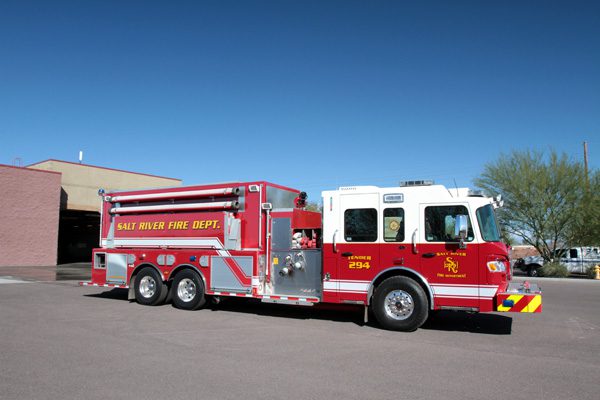
The Salt River Fire Department serves the Salt River Pima-Maricopa Indian Community, located just east of Scottsdale, Arizona. As a full-service, all-hazards agency, the department provides fire suppression, advanced life support emergency medical services, hazardous materials response, technical rescue, and community risk reduction. Operating out of multiple stations, Salt River Fire is known for its strong commitment to protecting tribal lands, residents, and the many visitors to the area’s commercial and recreational hubs. The department also emphasizes cultural respect, professional development, and collaborative partnerships with neighboring agencies.
If you’re looking for a place where effort and accountability aren’t prioritized—but the paycheck is—then this might be the department for you. There’s more money than sense here. The equipment and facilities are top-notch, but unfortunately, the output doesn’t match the investment. While most departments do more with less, this one seems to do less with more.
Leadership is a major concern. Chiefs seem more focused on headhunting than mentorship, and while they may say they care about their members, actions speak louder than words. Nonconformity or independent thinking is often seen as a threat, especially if you bring in outside experience. Book smarts are valued far more than real-world knowledge.
Off-duty behavior is scrutinized more than on-duty leadership failures, and people with no business in leadership roles are consistently promoted. Promotional exams feel more like a formality—the outcome often appears predetermined.
If my family needed emergency medical care or my home caught fire, I’d be genuinely concerned if certain SRFD units were the ones responding. There are many great people here, but they’re stuck in a system that punishes initiative and rewards compliance.
From the outside, the Salt River Fire Department appears to be a premier organization, equipped with state-of-the-art apparatus, equipment, and resources. The department benefits from substantial funding, which has helped create a strong public image and provides employees with excellent pay, benefits, and overtime opportunities.
However, many of the department’s challenges are not readily visible. Despite its financial resources, the organization appears to struggle with leadership and management issues that have negatively impacted morale and operations. Concerns include poor communication, excessive egos within the upper command staff, intimidation, inconsistent policy implementation, and a lack of effective mentorship. These factors have contributed to an environment that discourages internal professional development and promotions.
There is a perception among some employees that disciplinary actions, including terminations, can occur without adequate due process. Additionally, leadership shortcomings may have contributed to a significant incident that, in the view of many, might have been preventable.
A comprehensive evaluation of the department’s leadership structure and organizational culture may be warranted. Investing in strong, accountable leadership and fostering a culture of communication, transparency, and mentorship could help the department better align its internal operations with the high standard reflected by its external appearance.
While the compensation, benefits, and equipment remain major strengths, addressing these organizational concerns would likely improve employee confidence, retention, and overall departmental effectiveness.
Prioritizing external leadership recruiting while spending less on expensive superficial “appearances” should be the focus.




Rating Breakdown
1/5
1/5
4/5
2.5/5
2 Reviews on “Salt River Fire Department”
If you’re looking for a place where effort and accountability aren’t prioritized—but the paycheck is—then this might be the department for you. There’s more money than sense here. The equipment and facilities are top-notch, but unfortunately, the output doesn’t match the investment. While most departments do more with less, this one seems to do less with more.
Leadership is a major concern. Chiefs seem more focused on headhunting than mentorship, and while they may say they care about their members, actions speak louder than words. Nonconformity or independent thinking is often seen as a threat, especially if you bring in outside experience. Book smarts are valued far more than real-world knowledge.
Off-duty behavior is scrutinized more than on-duty leadership failures, and people with no business in leadership roles are consistently promoted. Promotional exams feel more like a formality—the outcome often appears predetermined.
If my family needed emergency medical care or my home caught fire, I’d be genuinely concerned if certain SRFD units were the ones responding. There are many great people here, but they’re stuck in a system that punishes initiative and rewards compliance.
From the outside, the Salt River Fire Department appears to be a premier organization, equipped with state-of-the-art apparatus, equipment, and resources. The department benefits from substantial funding, which has helped create a strong public image and provides employees with excellent pay, benefits, and overtime opportunities.
However, many of the department’s challenges are not readily visible. Despite its financial resources, the organization appears to struggle with leadership and management issues that have negatively impacted morale and operations. Concerns include poor communication, excessive egos within the upper command staff, intimidation, inconsistent policy implementation, and a lack of effective mentorship. These factors have contributed to an environment that discourages internal professional development and promotions.
There is a perception among some employees that disciplinary actions, including terminations, can occur without adequate due process. Additionally, leadership shortcomings may have contributed to a significant incident that, in the view of many, might have been preventable.
A comprehensive evaluation of the department’s leadership structure and organizational culture may be warranted. Investing in strong, accountable leadership and fostering a culture of communication, transparency, and mentorship could help the department better align its internal operations with the high standard reflected by its external appearance.
While the compensation, benefits, and equipment remain major strengths, addressing these organizational concerns would likely improve employee confidence, retention, and overall departmental effectiveness.
Prioritizing external leadership recruiting while spending less on expensive superficial “appearances” should be the focus.