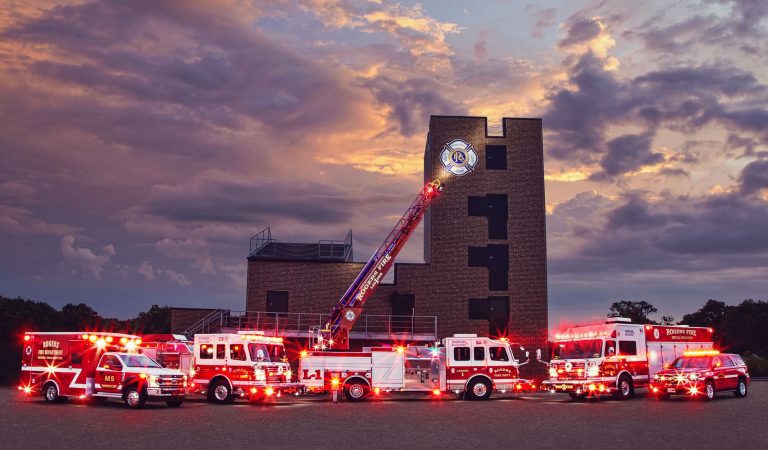
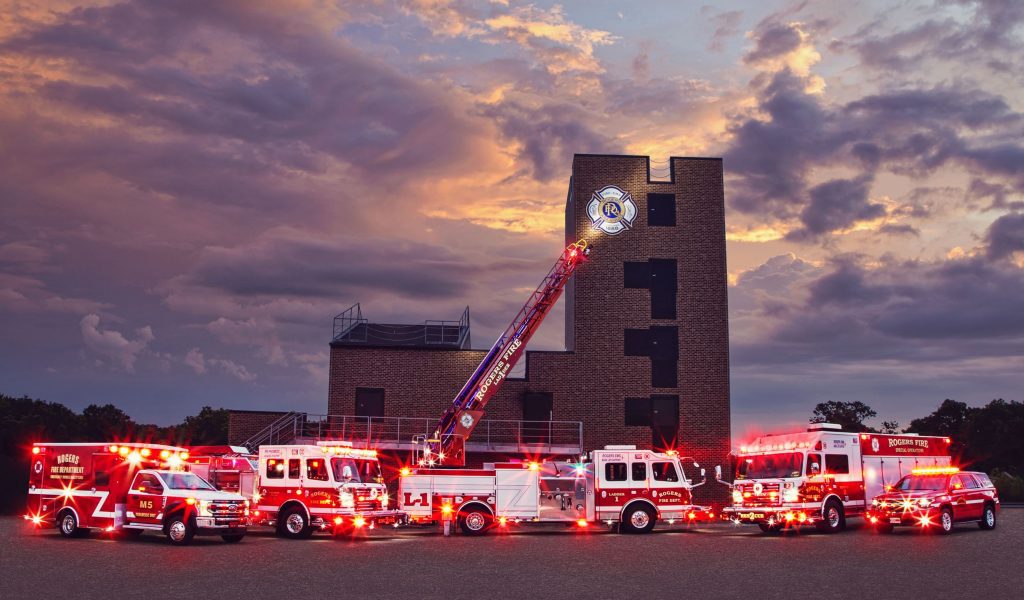
Rogers Fire Department (RFD) serves the City of Rogers, Arkansas, providing fire suppression, emergency medical services, technical rescue, hazardous materials response, and community risk reduction. The department operates multiple stations strategically located throughout the city and maintains a combination of engine, ladder, rescue, and support units to meet the needs of a growing population.
RFD places a strong emphasis on training, professional development, and health and safety standards. The department maintains an ISO Class 1 rating and follows a structured command system with clearly defined operational guidelines and expectations. Rogers Fire Department is known for its progressive approach to emergency services, incorporating modern equipment, data-driven decision making, and continuous improvement through after-action reviews and training programs.
With a focus on both service delivery and firefighter development, RFD strives to maintain high performance standards while serving the community with professionalism and accountability.
The Rogers Fire Department is one that is a shell of its former self. The department as a whole has become the laughingstock of Northwest Arkansas under the leadership of its current Fire Chief. While there are those among the Command Staff who are both passionate and capable, they are often stymied by the head honcho who places the whims of the mayor and HR director over the needs of the department.
Morale is low, mostly due to leadership issues. But there are still good people staffing the trucks that make daily work life bearable. The firefighters on the line are the heart of any fire department and being able to come into work and laugh around the kitchen table is a blessing that is not taken for granted. The culture is something that could use some work. Too many believe that simply showing up and putting the fire out is grounds for claiming exceptional customer service; that is merely the baseline expectation. Radio traffic is scrutinized while predetermined tactics are merely checked off an ICS sheet rather than examined for improvement. Promotion and career advancement are heavily pushed, leaving a dearth of backsteppers who are reliably excellent.
The apparatuses are, for the most part, still reliable. There are a couple trucks that regularly require repairs, but only every other month unlike some other less fortunate departments. Whether this will remain the case has yet to be seen. As far as equipment goes, RFD seems to be on top of much of the latest equipment; multiple rounds of bunker gear orders, brand new extrication equipment, Elkhart nozzles, etc. One major issue is the training center however. It has been in a state of disrepair since the tornado of May 2024 and looks to remain that way for the foreseeable future. The staff in the training division have done their best to make do in the meantime, and they would surely agree that the current timeline is rather egregious for a department that so heavily emphasizes training. Kudos to them for working with what they have to provide training at a standard of excellence despite the red tape and financial issues surrounding the rebuild.
Turnover and retention is not an issue that RFD faces alone; many departments across the country are dealing with the same problem. But to be constantly losing new applicants and experienced firefighters to other local departments is an embarrassing problem that needs to be addressed. The culture of promotion means that many paramedics end up less proficient than they could be before leaving the role behind. Along with other factors including, but not limited to: what master paramedics actually do and quick turnaround time on medic students, this has led to an increasing probability of the blind leading the blind on serious calls. Guys just a couple years in are becoming senior firefighters amongst their crews due to turnover and promotions. The job is becoming more and more white collar, where unrelated degrees and paper certifications are rewarded with pay bumps but longevity and experience are not.
All in all, the Rogers Fire Department is filled with good people who are suffering. Things need to change, but it needs to start from the top.





Rating Breakdown
1/5
2/5
3/5
2/5
1 Review on “Rogers Arkansas Fire Department”
The Rogers Fire Department is one that is a shell of its former self. The department as a whole has become the laughingstock of Northwest Arkansas under the leadership of its current Fire Chief. While there are those among the Command Staff who are both passionate and capable, they are often stymied by the head honcho who places the whims of the mayor and HR director over the needs of the department.
Morale is low, mostly due to leadership issues. But there are still good people staffing the trucks that make daily work life bearable. The firefighters on the line are the heart of any fire department and being able to come into work and laugh around the kitchen table is a blessing that is not taken for granted. The culture is something that could use some work. Too many believe that simply showing up and putting the fire out is grounds for claiming exceptional customer service; that is merely the baseline expectation. Radio traffic is scrutinized while predetermined tactics are merely checked off an ICS sheet rather than examined for improvement. Promotion and career advancement are heavily pushed, leaving a dearth of backsteppers who are reliably excellent.
The apparatuses are, for the most part, still reliable. There are a couple trucks that regularly require repairs, but only every other month unlike some other less fortunate departments. Whether this will remain the case has yet to be seen. As far as equipment goes, RFD seems to be on top of much of the latest equipment; multiple rounds of bunker gear orders, brand new extrication equipment, Elkhart nozzles, etc. One major issue is the training center however. It has been in a state of disrepair since the tornado of May 2024 and looks to remain that way for the foreseeable future. The staff in the training division have done their best to make do in the meantime, and they would surely agree that the current timeline is rather egregious for a department that so heavily emphasizes training. Kudos to them for working with what they have to provide training at a standard of excellence despite the red tape and financial issues surrounding the rebuild.
Turnover and retention is not an issue that RFD faces alone; many departments across the country are dealing with the same problem. But to be constantly losing new applicants and experienced firefighters to other local departments is an embarrassing problem that needs to be addressed. The culture of promotion means that many paramedics end up less proficient than they could be before leaving the role behind. Along with other factors including, but not limited to: what master paramedics actually do and quick turnaround time on medic students, this has led to an increasing probability of the blind leading the blind on serious calls. Guys just a couple years in are becoming senior firefighters amongst their crews due to turnover and promotions. The job is becoming more and more white collar, where unrelated degrees and paper certifications are rewarded with pay bumps but longevity and experience are not.
All in all, the Rogers Fire Department is filled with good people who are suffering. Things need to change, but it needs to start from the top.