Portsmouth Fire Department is located on the Aquidneck Island of southern Rhode Island. PFD is a fully career and organized union department (Local 1949). PFD is responsible for approximately 59.3 mi², serving a population of about 17,871 residents. The Portsmouth Fire Department staffs 47 total personnel which includes 24 Firefighters, 8 Lieutenants, 4 Line Captains, 3 Line Battalion Chiefs, 1 Administrative EMS Captain, 1 Administrative Battalion Chief, 1 Assistant Chief, 1 Department Chief and 4 Civilian Dispatchers.
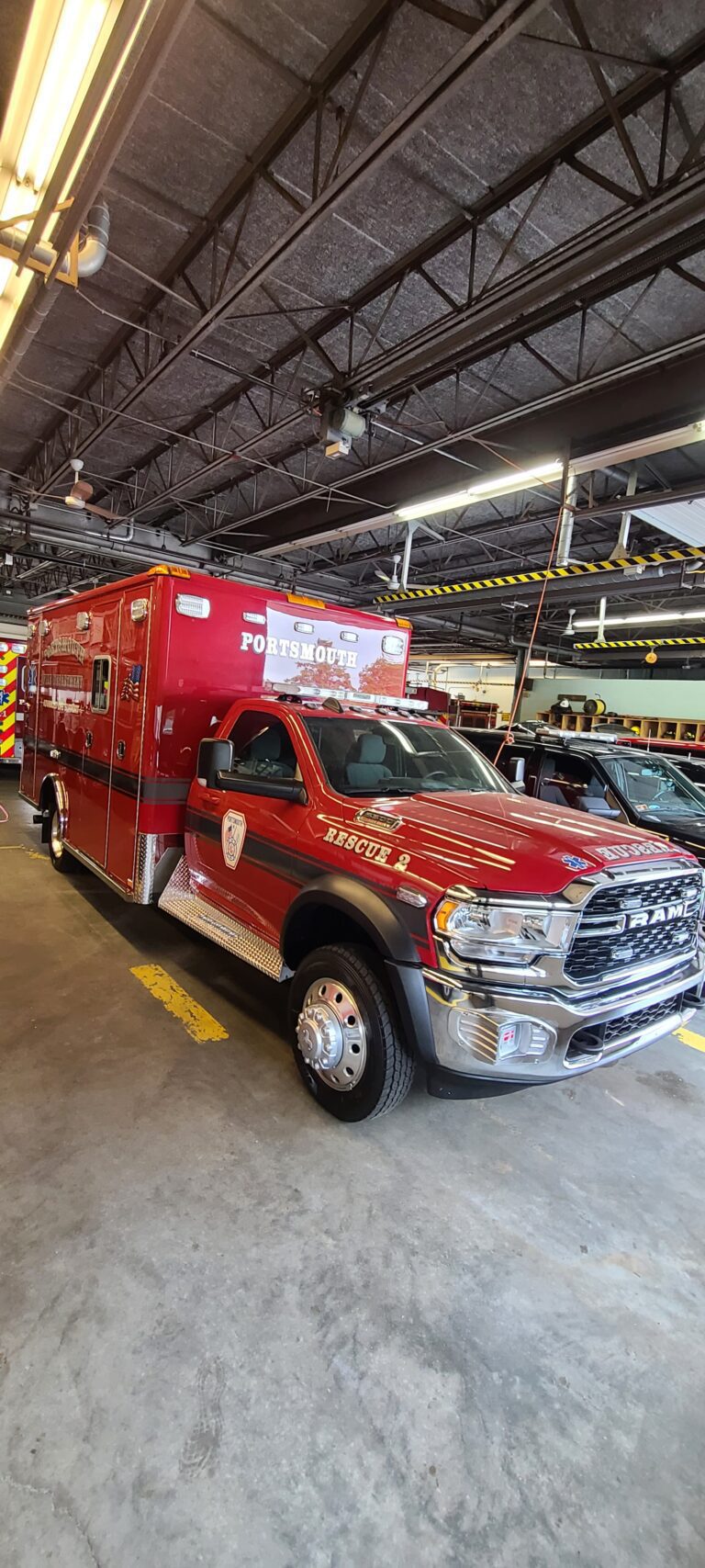
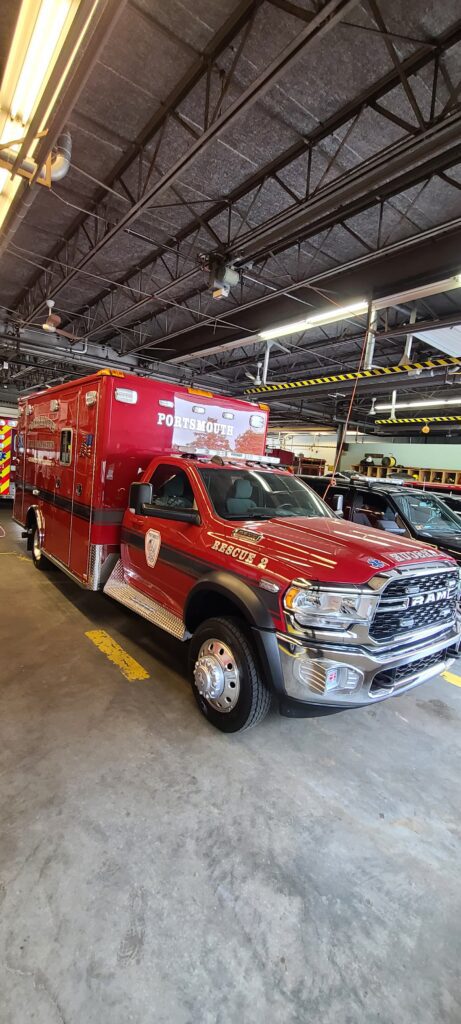
The Department responds with a fleet of 1 ALS equipped engine, 1 BLS equipped engine, 1 Tower Ladder, 2 ALS medical rescues of which each rescue is cross-staffed with the BLS Engine and Tower Ladder. Other apparatus utilized by the department are an EMS fly car, a brush truck, a command vehicle and 3 Marine units. Portsmouth Fire Department is housed in a single station located in the central part of the town.
Overall, Portsmouth is a decent place to work. The department members from firefighters up to Battalion Chiefs are solid. The biggest downfall is having an assistant chief who also serves as the union president. That unique dynamic allows the person in that position to make unilateral decisions that sometimes undermines and circumvents the Chief of the Department. Most of the time this predicament stifles the ability to make changes to the department, operationally, that would improve overall efficiency, morale, effectiveness and progress towards modernization.
This department has become stagnant. While there are many dedicated officers and firefighters who continually try to move it forward, their efforts are often undermined by an assistant chief who seems unwilling to adapt or accept new ideas. He is resistant to change, overly confident in his own abilities, and has repeatedly caused initiatives to fail simply because they were not his idea or beyond his understanding.
The assistant chief also frequently engages in unprofessional behavior—openly criticizing colleagues, fostering negativity, and damaging morale within the station. The fire chief, while generally well-intentioned and supportive of the members, allows the assistant chief far too much influence and control.
As others have noted, the assistant chief also serves as the union president and the fire chief of a volunteer department, positions that appear to further inflate his ego and sense of authority. His close ally, a battalion chief who serves as the union’s vice president, mirrors his behavior. The battalion chief advanced rapidly through the ranks, moving from an ambulance to shift commander with limited operational experience. He, too, exercises selective control, choosing when and to whom it applies.
Together, they have created an environment where favoritism thrives. Those within their inner circle are treated well, while others face double standards, exclusion, and constant criticism behind their backs. The result is a workplace divided, demoralized, and hindered by poor leadership at the top.
I want to apologize in advance to any of my friends who still work there if this post sparks a witch hunt to figure out who wrote it. I can assure you, the author is a former member of the department who no longer works there.



Rating Breakdown
1/5
3/5
3/5
3.5/5
2 Reviews on “Portsmouth Fire Department (Rhode Island)”
Overall, Portsmouth is a decent place to work. The department members from firefighters up to Battalion Chiefs are solid. The biggest downfall is having an assistant chief who also serves as the union president. That unique dynamic allows the person in that position to make unilateral decisions that sometimes undermines and circumvents the Chief of the Department. Most of the time this predicament stifles the ability to make changes to the department, operationally, that would improve overall efficiency, morale, effectiveness and progress towards modernization.
This department has become stagnant. While there are many dedicated officers and firefighters who continually try to move it forward, their efforts are often undermined by an assistant chief who seems unwilling to adapt or accept new ideas. He is resistant to change, overly confident in his own abilities, and has repeatedly caused initiatives to fail simply because they were not his idea or beyond his understanding.
The assistant chief also frequently engages in unprofessional behavior—openly criticizing colleagues, fostering negativity, and damaging morale within the station. The fire chief, while generally well-intentioned and supportive of the members, allows the assistant chief far too much influence and control.
As others have noted, the assistant chief also serves as the union president and the fire chief of a volunteer department, positions that appear to further inflate his ego and sense of authority. His close ally, a battalion chief who serves as the union’s vice president, mirrors his behavior. The battalion chief advanced rapidly through the ranks, moving from an ambulance to shift commander with limited operational experience. He, too, exercises selective control, choosing when and to whom it applies.
Together, they have created an environment where favoritism thrives. Those within their inner circle are treated well, while others face double standards, exclusion, and constant criticism behind their backs. The result is a workplace divided, demoralized, and hindered by poor leadership at the top.
I want to apologize in advance to any of my friends who still work there if this post sparks a witch hunt to figure out who wrote it. I can assure you, the author is a former member of the department who no longer works there.