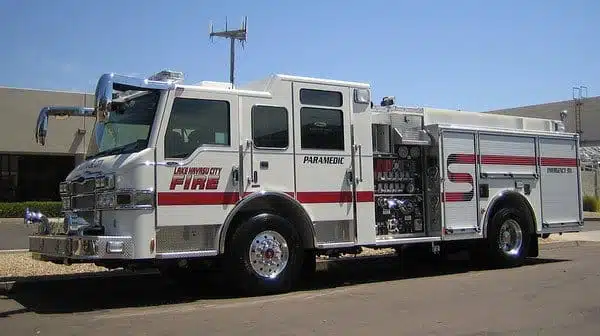
The Lake Havasu City Fire Department (LHCFD) is a municipal, all-hazards fire and emergency medical services agency serving Lake Havasu City, Arizona. Established in 1966, the department operates six fire stations, with a seventh planned for 2027, covering more than 46 square miles. Services include fire suppression, advanced life support EMS and ambulance transport, hazardous materials response, technical rescue, desert and water rescue, aircraft firefighting, and fire prevention. The department operates with approximately 28 personnel on duty daily, including a battalion chief, captains, engineers, and firefighters. The department is led by Fire Chief Pete Pilafas.
I spent several years working for Lake Havasu City Fire Department. I genuinely loved serving the community where I lived, and I took immense pride in protecting my neighbors and working alongside some outstanding firefighters.
Unfortunately, the department’s biggest weakness is its leadership.
In my experience, Lake Havasu Fire suffers from an insular leadership culture. Many leaders have spent their entire careers within the same department, with limited exposure to different operational philosophies or leadership styles. Outside training and fresh ideas are often met with resistance rather than encouragement.
I had hoped Chief Pete Pilafas would bring meaningful improvements. Instead, I felt his leadership introduced increasingly restrictive policies that damaged morale and made the department a less desirable place to work.
Requirements for doctors’ notes when using sick leave, vacation blackout dates despite negotiated leave provisions, and restrictions on using accrued leave before retirement all contributed to that frustration. Rather than supporting employees and their families, these changes made it feel as though leadership was working against them.
Add in below-market compensation concerns, limited cost-of-living adjustments, an unattractive Tier 3 retirement package, and paramedics spending weeks or months assigned to ambulances due to staffing shortages, and it’s easy to understand why so many talented firefighters have left for other departments.
The culture needs to change. Leadership isn’t about degrees, rank, or how many years you’ve been at the same department. It’s about earning trust, listening to your people, adapting, and making the organization better.
Lake Havasu has some truly exceptional firefighters, and the community is fortunate to have them. They deserve a leadership team that invests in their success instead of creating unnecessary obstacles.
I don’t regret serving Lake Havasu. I regret watching a department with so much potential struggle under leadership that, in my experience, consistently failed its employees.
I spent several years with Lake Havasu City Fire Department, and I will always appreciate the opportunity to serve the community I grew up in. I worked alongside some incredible firefighters, great officers, and genuinely good people who took pride in their jobs. Unfortunately, the department has struggled with many of the same issues for years, and at some point, you have to ask why nothing seems to change.
Lake Havasu Fire was once a destination department. Back in the early 2000s, firefighters from across Arizona wanted to work there. Unfortunately, following the recession, the department never truly recovered when it came to competitive wages, benefits, staffing, and retirement.
For years, firefighters were expected to do more with less. Three-person engines, inadequate staffing, and a growing community that desperately needed another fire station long before one was finally built. I’m not sure how they will even staff it. The expectation was always to make it work, regardless of the resources available.
Compensation has always been a major issue. The reality is that many firefighters couldn’t afford to raise a family and maintain a decent quality of life on their department salary alone. Almost everyone needed a second job, whether that was HVAC, window cleaning, concrete work, real estate, or another business. Firefighters shouldn’t have to work multiple jobs just to afford to live in the community they protect.
In my experience, department leadership rarely demonstrated the willingness to aggressively advocate for better compensation, staffing, or benefits before City Council. There always seemed to be an excuse for why something couldn’t be done rather than a plan to make it happen.
But perhaps the biggest reflection of the department’s ongoing problems is the revolving door of firefighters and paramedics leaving for better opportunities.
I distinctly remember when I worked there, someone maintained a list documenting every firefighter and firefighter/paramedic who had left the organization, how many years they had served, and which department they went to. That list was already concerning back then, and I can only imagine it has grown to well over 100 names today.
Think about that for a moment. An organization invests time and money into hiring, training, and developing firefighters, only to watch them leave for departments offering better compensation, retirement, working conditions, and opportunities. At what point does leadership recognize that this isn’t simply a recruitment problem? It’s a retention problem, and the revolving door should be one of the biggest warning signs that something within the organization needs to change.
What frustrated me most was watching good people with strong leadership qualities and a desire to improve the department get passed over for promotions. In my opinion, those who challenged the status quo or pushed for meaningful change sometimes faced what appeared to be punitive treatment. Many eventually promoted, but only after years of unnecessary setbacks. A department should encourage independent thinking and leadership, not discourage it.
Now look at where things stand. Arizona’s retirement system has become increasingly less attractive for newer firefighters. The department struggles to retain firefighters and paramedics, yet continues expanding its ambulance operations without, in my opinion, adequately addressing competitive paramedic compensation. Recruitment and on-the-job training programs can only accomplish so much when the underlying problems with morale, culture, pay, and benefits remain unresolved.
The department has also lost its HazMat team, while its technical rescue capabilities appear to be hanging on by a thread. These specialized services take years of training, investment, and commitment to develop. Losing them should raise serious questions about the direction and priorities of the organization.
I understand that not every issue falls solely on the fire chief. City administration, elected officials, budgets, and economic conditions all play a role. But leadership means advocating for your people, even when those conversations are uncomfortable. It means standing before City Council and fighting for the resources necessary to protect both your firefighters and your community.
The problem has never been the quality of firefighters in Lake Havasu. The problem is creating an environment where those firefighters actually want to stay.
I loved serving Lake Havasu, and part of me wishes I could have spent my entire career there. But ultimately, I had to make the decision that was best for myself and my family.
One experience that has always stuck with me happened just before I resigned to accept a position with another fire department. The fire chief personally called me into his office and told me I was making the biggest mistake of my life by leaving. Ironically, shortly after I left, that same fire chief resigned from his position.
Looking back, leaving was one of the best decisions I could have made for myself and my family. The irony of being told I was making the worst decision of my life by someone who would soon leave the organization himself has never been lost on me.
I don’t share any of this out of bitterness. I share it because I genuinely cared about that department, the community, and the people I worked alongside. I still want to see Lake Havasu Fire succeed.
But at some point, the organization needs to stop asking why good firefighters keep leaving and start asking what it’s doing to make them stay. When you have years of employees leaving for better opportunities, that should be a wake-up call to every fire chief, city manager, and elected official.
Lake Havasu deserves a strong fire department, and the firefighters who continue serving that community deserve leadership willing to fight just as hard for them as they fight for the people they protect.
Continuing to repeat the same actions while expecting a different outcome—I believe that’s the definition of insanity.





Rating Breakdown
1/5
1.5/5
2.5/5
2/5
2 Reviews on “Lake Havasu City Fire Department”
I spent several years working for Lake Havasu City Fire Department. I genuinely loved serving the community where I lived, and I took immense pride in protecting my neighbors and working alongside some outstanding firefighters.
Unfortunately, the department’s biggest weakness is its leadership.
In my experience, Lake Havasu Fire suffers from an insular leadership culture. Many leaders have spent their entire careers within the same department, with limited exposure to different operational philosophies or leadership styles. Outside training and fresh ideas are often met with resistance rather than encouragement.
I had hoped Chief Pete Pilafas would bring meaningful improvements. Instead, I felt his leadership introduced increasingly restrictive policies that damaged morale and made the department a less desirable place to work.
Requirements for doctors’ notes when using sick leave, vacation blackout dates despite negotiated leave provisions, and restrictions on using accrued leave before retirement all contributed to that frustration. Rather than supporting employees and their families, these changes made it feel as though leadership was working against them.
Add in below-market compensation concerns, limited cost-of-living adjustments, an unattractive Tier 3 retirement package, and paramedics spending weeks or months assigned to ambulances due to staffing shortages, and it’s easy to understand why so many talented firefighters have left for other departments.
The culture needs to change. Leadership isn’t about degrees, rank, or how many years you’ve been at the same department. It’s about earning trust, listening to your people, adapting, and making the organization better.
Lake Havasu has some truly exceptional firefighters, and the community is fortunate to have them. They deserve a leadership team that invests in their success instead of creating unnecessary obstacles.
I don’t regret serving Lake Havasu. I regret watching a department with so much potential struggle under leadership that, in my experience, consistently failed its employees.
I spent several years with Lake Havasu City Fire Department, and I will always appreciate the opportunity to serve the community I grew up in. I worked alongside some incredible firefighters, great officers, and genuinely good people who took pride in their jobs. Unfortunately, the department has struggled with many of the same issues for years, and at some point, you have to ask why nothing seems to change.
Lake Havasu Fire was once a destination department. Back in the early 2000s, firefighters from across Arizona wanted to work there. Unfortunately, following the recession, the department never truly recovered when it came to competitive wages, benefits, staffing, and retirement.
For years, firefighters were expected to do more with less. Three-person engines, inadequate staffing, and a growing community that desperately needed another fire station long before one was finally built. I’m not sure how they will even staff it. The expectation was always to make it work, regardless of the resources available.
Compensation has always been a major issue. The reality is that many firefighters couldn’t afford to raise a family and maintain a decent quality of life on their department salary alone. Almost everyone needed a second job, whether that was HVAC, window cleaning, concrete work, real estate, or another business. Firefighters shouldn’t have to work multiple jobs just to afford to live in the community they protect.
In my experience, department leadership rarely demonstrated the willingness to aggressively advocate for better compensation, staffing, or benefits before City Council. There always seemed to be an excuse for why something couldn’t be done rather than a plan to make it happen.
But perhaps the biggest reflection of the department’s ongoing problems is the revolving door of firefighters and paramedics leaving for better opportunities.
I distinctly remember when I worked there, someone maintained a list documenting every firefighter and firefighter/paramedic who had left the organization, how many years they had served, and which department they went to. That list was already concerning back then, and I can only imagine it has grown to well over 100 names today.
Think about that for a moment. An organization invests time and money into hiring, training, and developing firefighters, only to watch them leave for departments offering better compensation, retirement, working conditions, and opportunities. At what point does leadership recognize that this isn’t simply a recruitment problem? It’s a retention problem, and the revolving door should be one of the biggest warning signs that something within the organization needs to change.
What frustrated me most was watching good people with strong leadership qualities and a desire to improve the department get passed over for promotions. In my opinion, those who challenged the status quo or pushed for meaningful change sometimes faced what appeared to be punitive treatment. Many eventually promoted, but only after years of unnecessary setbacks. A department should encourage independent thinking and leadership, not discourage it.
Now look at where things stand. Arizona’s retirement system has become increasingly less attractive for newer firefighters. The department struggles to retain firefighters and paramedics, yet continues expanding its ambulance operations without, in my opinion, adequately addressing competitive paramedic compensation. Recruitment and on-the-job training programs can only accomplish so much when the underlying problems with morale, culture, pay, and benefits remain unresolved.
The department has also lost its HazMat team, while its technical rescue capabilities appear to be hanging on by a thread. These specialized services take years of training, investment, and commitment to develop. Losing them should raise serious questions about the direction and priorities of the organization.
I understand that not every issue falls solely on the fire chief. City administration, elected officials, budgets, and economic conditions all play a role. But leadership means advocating for your people, even when those conversations are uncomfortable. It means standing before City Council and fighting for the resources necessary to protect both your firefighters and your community.
The problem has never been the quality of firefighters in Lake Havasu. The problem is creating an environment where those firefighters actually want to stay.
I loved serving Lake Havasu, and part of me wishes I could have spent my entire career there. But ultimately, I had to make the decision that was best for myself and my family.
One experience that has always stuck with me happened just before I resigned to accept a position with another fire department. The fire chief personally called me into his office and told me I was making the biggest mistake of my life by leaving. Ironically, shortly after I left, that same fire chief resigned from his position.
Looking back, leaving was one of the best decisions I could have made for myself and my family. The irony of being told I was making the worst decision of my life by someone who would soon leave the organization himself has never been lost on me.
I don’t share any of this out of bitterness. I share it because I genuinely cared about that department, the community, and the people I worked alongside. I still want to see Lake Havasu Fire succeed.
But at some point, the organization needs to stop asking why good firefighters keep leaving and start asking what it’s doing to make them stay. When you have years of employees leaving for better opportunities, that should be a wake-up call to every fire chief, city manager, and elected official.
Lake Havasu deserves a strong fire department, and the firefighters who continue serving that community deserve leadership willing to fight just as hard for them as they fight for the people they protect.
Continuing to repeat the same actions while expecting a different outcome—I believe that’s the definition of insanity.