


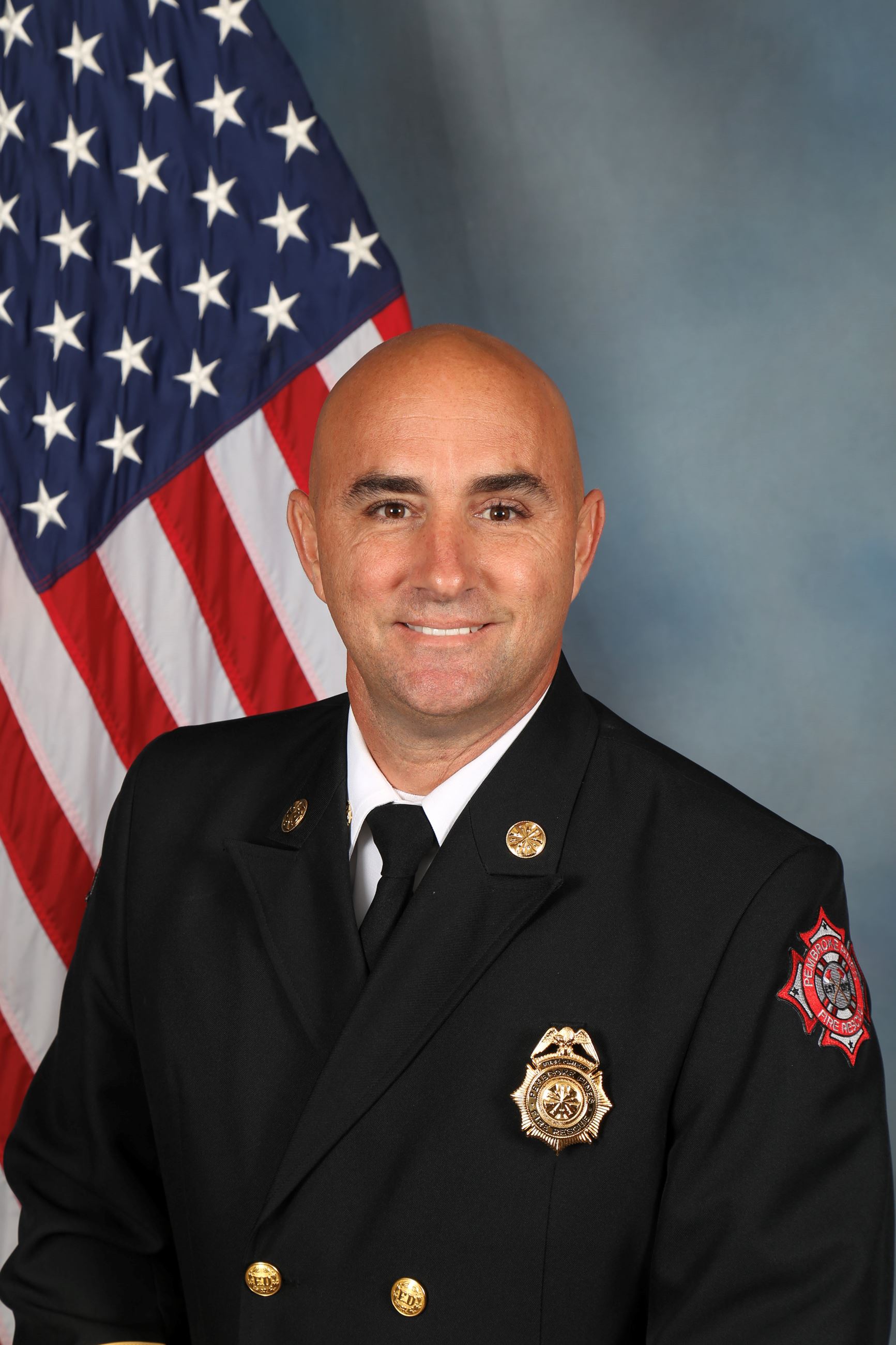
Home » Chiefs » United States » Florida » Pembroke Pines » Marcelino Rodriguez
About the Chief
When I think about Chief Marcelino Rodriguez’s leadership, the first word that comes to mind is inconsistency. The second is favoritism. In my view, he does not represent the kind of leadership that builds trust, develops people, or strengthens a department from the inside out. Instead, he represents a style of command that appears rooted in politics, personal loyalty, selective enforcement, and control.
From the start, his background has always stood out. He came into the department as part of one of the rare two-week hire classes, which meant he did not go through the same full recruit academy process that most members were required to complete. That may seem like old history to some, but in a profession where standards, credibility, and shared experience matter, it is not insignificant. For many, leadership legitimacy begins with having walked the same road as everyone else. When a chief’s career begins under a different set of circumstances and he later governs others with rigid authority, people notice that contradiction.
As he moved up through the ranks, there has been a strong perception that merit was not always the deciding factor in who advanced, who was protected, and who was targeted. In my opinion, that perception did not come out of nowhere. It came from repeated patterns that many members observed over time. He was elevated into fire administration despite reported concerns about his performance in the promotional process, and once he obtained real authority, that authority appeared to be exercised unevenly.
After moving into Rescue and later Operations, the pattern became more troubling. In my view, personal relationships were allowed to influence professional decision-making. There has been a longstanding belief among members that he used his position to protect his brother-in-law on multiple occasions. Whether leadership wants to acknowledge that perception or not, it has damaged confidence in the fairness of command decisions. When firefighters believe certain individuals are insulated because of family ties or personal relationships, the message is clear: standards are not universal. They are conditional.
That same concern extends to promotion and advancement. I have seen and heard enough to believe that qualified people were passed over for Captain and Lieutenant positions, not because they lacked merit, but because they were on the wrong side of personal grudges, politics, or vendettas. Nothing destroys morale faster than a promotional system that people believe is compromised. Once members stop believing that hard work, competence, and professionalism matter, the entire culture begins to rot. People become cynical. Good employees disengage. Strong future leaders stop trusting the process. That is the kind of damage this style of leadership causes.
What makes it worse is the philosophy behind it. Chief Rodriguez has expressed the belief that there are no books on leadership that can teach you how to lead, and that you simply have to “be a boss.” To me, that statement says everything. It reflects a shallow, outdated, and deeply flawed understanding of leadership. Real leadership is not about being a boss. It is not about intimidation, ego, or dominance. It is about character, fairness, judgment, accountability, communication, and the ability to earn respect without demanding it. When someone dismisses leadership development and reduces the role to “being a boss,” what usually follows is exactly what many in the department appear to have experienced: command through fear, politics, and selective treatment instead of leadership through credibility and example.
Another major issue is the way members have allegedly been treated based on union affiliation and prior history with leadership. In my opinion, that is one of the most troubling aspects of his tenure. There are concerns that some members were denied light-duty assignments not because of legitimate departmental needs, but because of union ties or because they had fallen out of favor. If that is how discretion is being used, then discretion has become a weapon. A chief should never be in the business of punishing people for protected association, prior disagreements, or perceived disloyalty. Once members begin to believe that their union status can affect how they are treated medically, administratively, or professionally, the leadership climate becomes toxic.
His stance toward the union has also been a major source of division. He is widely viewed as openly anti-union, and that hostility appears to influence both attitude and decision-making. There is a difference between disagreeing with a union and targeting the people associated with it. In my experience, the concern here is not just philosophical disagreement. It is that members connected to the union seem to be disciplined more harshly, treated with more suspicion, and denied the benefit of fairness routinely extended to others. That creates an environment where people no longer feel they are being judged by performance alone.
On staffing, his position is equally alarming. A chief who is willing to operate with reduced staffing because it is “in the city’s interest” or financially responsible is, in my view, prioritizing budgets over firefighters and public safety. That is not responsible leadership. That is managerial convenience disguised as fiscal discipline. Fire service leadership should begin with the understanding that staffing is not just a financial line item. It is a safety issue, a readiness issue, and a service-delivery issue. When reduced staffing becomes acceptable because it saves money, the burden falls on the backs of firefighters and the risk is pushed onto the public. That approach may please administrators looking at spreadsheets, but it does not inspire confidence among the people expected to do the work.
The larger problem with Chief Rodriguez is not one single act or one isolated decision. It is the overall pattern. The pattern suggests a leader who appears more comfortable rewarding loyalty than upholding fairness, more willing to protect favored individuals than enforce standards evenly, and more inclined to use authority as a tool of control than as a duty of stewardship. That kind of leadership may consolidate power, but it does not build respect. It does not produce trust. And it certainly does not leave a department stronger than it found it.
In my opinion, Chief Marcelino Rodriguez represents a command style that has contributed to low morale, deep distrust, and a widespread belief that standards are applied selectively. Promotions appear tainted by politics, discipline appears influenced by relationships and union hostility, and leadership appears driven more by ego and allegiance than by ethics and merit. Even if leadership supporters dismiss these concerns as complaints from disgruntled members, that response itself misses the point. When the same themes continue to surface over time from multiple directions, they deserve to be taken seriously.
My overall assessment is that Chief Rodriguez does not come across as a principled, service-minded leader. He comes across as a chief shaped by favoritism, retaliation, political thinking, and an outdated “boss first” mentality. In a profession that demands integrity, impartiality, and trust, that is not a small flaw. It is a fundamental failure of leadership.
Fire Chief
Sorry, no records were found. Please adjust your search criteria and try again.
Sorry, unable to load the Maps API.
Contact Information
, Florida

Rating Breakdown
1/5
1/5
1/5
1/5
1 Review on “Marcelino Rodriguez”
When I think about Chief Marcelino Rodriguez’s leadership, the first word that comes to mind is inconsistency. The second is favoritism. In my view, he does not represent the kind of leadership that builds trust, develops people, or strengthens a department from the inside out. Instead, he represents a style of command that appears rooted in politics, personal loyalty, selective enforcement, and control.
From the start, his background has always stood out. He came into the department as part of one of the rare two-week hire classes, which meant he did not go through the same full recruit academy process that most members were required to complete. That may seem like old history to some, but in a profession where standards, credibility, and shared experience matter, it is not insignificant. For many, leadership legitimacy begins with having walked the same road as everyone else. When a chief’s career begins under a different set of circumstances and he later governs others with rigid authority, people notice that contradiction.
As he moved up through the ranks, there has been a strong perception that merit was not always the deciding factor in who advanced, who was protected, and who was targeted. In my opinion, that perception did not come out of nowhere. It came from repeated patterns that many members observed over time. He was elevated into fire administration despite reported concerns about his performance in the promotional process, and once he obtained real authority, that authority appeared to be exercised unevenly.
After moving into Rescue and later Operations, the pattern became more troubling. In my view, personal relationships were allowed to influence professional decision-making. There has been a longstanding belief among members that he used his position to protect his brother-in-law on multiple occasions. Whether leadership wants to acknowledge that perception or not, it has damaged confidence in the fairness of command decisions. When firefighters believe certain individuals are insulated because of family ties or personal relationships, the message is clear: standards are not universal. They are conditional.
That same concern extends to promotion and advancement. I have seen and heard enough to believe that qualified people were passed over for Captain and Lieutenant positions, not because they lacked merit, but because they were on the wrong side of personal grudges, politics, or vendettas. Nothing destroys morale faster than a promotional system that people believe is compromised. Once members stop believing that hard work, competence, and professionalism matter, the entire culture begins to rot. People become cynical. Good employees disengage. Strong future leaders stop trusting the process. That is the kind of damage this style of leadership causes.
What makes it worse is the philosophy behind it. Chief Rodriguez has expressed the belief that there are no books on leadership that can teach you how to lead, and that you simply have to “be a boss.” To me, that statement says everything. It reflects a shallow, outdated, and deeply flawed understanding of leadership. Real leadership is not about being a boss. It is not about intimidation, ego, or dominance. It is about character, fairness, judgment, accountability, communication, and the ability to earn respect without demanding it. When someone dismisses leadership development and reduces the role to “being a boss,” what usually follows is exactly what many in the department appear to have experienced: command through fear, politics, and selective treatment instead of leadership through credibility and example.
Another major issue is the way members have allegedly been treated based on union affiliation and prior history with leadership. In my opinion, that is one of the most troubling aspects of his tenure. There are concerns that some members were denied light-duty assignments not because of legitimate departmental needs, but because of union ties or because they had fallen out of favor. If that is how discretion is being used, then discretion has become a weapon. A chief should never be in the business of punishing people for protected association, prior disagreements, or perceived disloyalty. Once members begin to believe that their union status can affect how they are treated medically, administratively, or professionally, the leadership climate becomes toxic.
His stance toward the union has also been a major source of division. He is widely viewed as openly anti-union, and that hostility appears to influence both attitude and decision-making. There is a difference between disagreeing with a union and targeting the people associated with it. In my experience, the concern here is not just philosophical disagreement. It is that members connected to the union seem to be disciplined more harshly, treated with more suspicion, and denied the benefit of fairness routinely extended to others. That creates an environment where people no longer feel they are being judged by performance alone.
On staffing, his position is equally alarming. A chief who is willing to operate with reduced staffing because it is “in the city’s interest” or financially responsible is, in my view, prioritizing budgets over firefighters and public safety. That is not responsible leadership. That is managerial convenience disguised as fiscal discipline. Fire service leadership should begin with the understanding that staffing is not just a financial line item. It is a safety issue, a readiness issue, and a service-delivery issue. When reduced staffing becomes acceptable because it saves money, the burden falls on the backs of firefighters and the risk is pushed onto the public. That approach may please administrators looking at spreadsheets, but it does not inspire confidence among the people expected to do the work.
The larger problem with Chief Rodriguez is not one single act or one isolated decision. It is the overall pattern. The pattern suggests a leader who appears more comfortable rewarding loyalty than upholding fairness, more willing to protect favored individuals than enforce standards evenly, and more inclined to use authority as a tool of control than as a duty of stewardship. That kind of leadership may consolidate power, but it does not build respect. It does not produce trust. And it certainly does not leave a department stronger than it found it.
In my opinion, Chief Marcelino Rodriguez represents a command style that has contributed to low morale, deep distrust, and a widespread belief that standards are applied selectively. Promotions appear tainted by politics, discipline appears influenced by relationships and union hostility, and leadership appears driven more by ego and allegiance than by ethics and merit. Even if leadership supporters dismiss these concerns as complaints from disgruntled members, that response itself misses the point. When the same themes continue to surface over time from multiple directions, they deserve to be taken seriously.
My overall assessment is that Chief Rodriguez does not come across as a principled, service-minded leader. He comes across as a chief shaped by favoritism, retaliation, political thinking, and an outdated “boss first” mentality. In a profession that demands integrity, impartiality, and trust, that is not a small flaw. It is a fundamental failure of leadership.