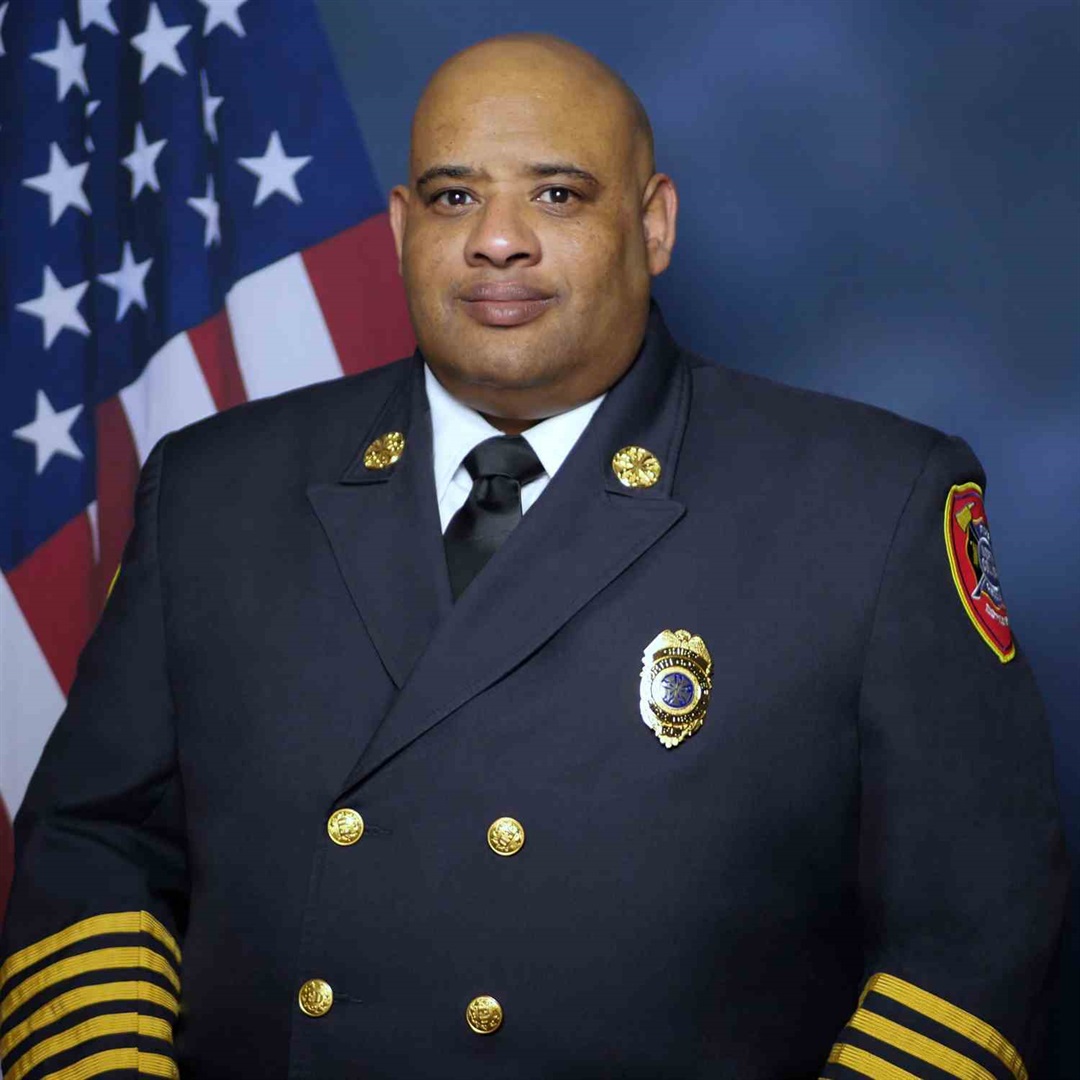
Eloy Ricardo serves as the Fire Chief of the North Collier Fire Rescue District. As Fire Chief, he is responsible for the overall administration and operation of the District, including emergency services, personnel management, budgeting, strategic planning, and organizational oversight.
Chief Ricardo works with the Board of Fire Commissioners, District staff, local government agencies, and public safety partners to coordinate District operations and implement established policies and priorities. He also represents the District in matters involving interagency coordination, community relations, and emergency management.
In his role, Chief Ricardo oversees the District’s fire suppression, emergency medical, rescue, fire prevention, and related support functions while managing the resources and personnel necessary to provide these services to the community.
1 star. During my time with this department, my biggest disappointment has been leadership at the top. In my experience, the chief had very limited day-to-day presence with crews, rarely engaging directly with firefighters or paramedics. Communication felt distant, and important updates often seemed to travel through rumor rather than clear channels. A third-party anonymous employee survey was never shared with employees despite repeated requests, which eroded trust even further. Many employees, myself included, felt that speaking up could negatively affect work life. Whether intentional or not, that perception created a culture where people felt safer staying quiet than being honest. One statement during contract negotiations has stayed with me for years. When employees raised concerns that wages weren’t enough to support families, the response was, “We’re not here to provide for you and an entire family. We’re only here to provide for you. If you need more money, go get a second job like everyone else.” Whether others interpret that differently, that statement, summed up the leadership culture I experienced. I was also disappointed by what I viewed as a lack of meaningful accountability. From my perspective, employee concerns rarely resulted in visible change, and public responses from the Board of Fire Commissioners reinforced my perception that leadership was consistently supported despite ongoing concerns raised by employees. That left me feeling like the voices of the firefighters and paramedics working on the line carried very little weight. During a local investigative news interview, the chief described his work as seasonal, while responding to questions about his presence at headquarters. I found that explanation hard to reconcile with my own experience. I expected the chief to be consistently present and engaged with the department, and that response did not increase my confidence. Another incident that further undermined my confidence involved a weekday medical emergency at a local water park that became known in the context of broader public questions about leadership presence and work hours. Regardless of the explanation, it raised additional concerns for me about accountability and whether the same standards expected of everyone else were being applied at the highest level. I never felt those concerns were meaningfully addressed. I also believe leadership should set the example for the organization. Firefighting is a physically demanding profession, built on preparedness, professionalism and readiness. I expected the chief to visibly embody those standards, and demonstrate the example expected throughout the department. In my experience, that example was lacking and it weakened my confidence in the leadership. Some of these broader concerns were also echoed in a local investigative news report, which documented questions from employees alongside the department’s responses. I wanted this department to succeed because the people on the line deserve strong leadership. But after years of working here, I was left believing that the department’s greatest weakness was not its people or its operations, but its leadership. For that reason, I cannot recommend this department’s leadership based on my experience.



Rating Breakdown
1/5
1/5
1/5
1/5
1 Review on “Eloy Ricardo”
1 star. During my time with this department, my biggest disappointment has been leadership at the top. In my experience, the chief had very limited day-to-day presence with crews, rarely engaging directly with firefighters or paramedics. Communication felt distant, and important updates often seemed to travel through rumor rather than clear channels. A third-party anonymous employee survey was never shared with employees despite repeated requests, which eroded trust even further. Many employees, myself included, felt that speaking up could negatively affect work life. Whether intentional or not, that perception created a culture where people felt safer staying quiet than being honest. One statement during contract negotiations has stayed with me for years. When employees raised concerns that wages weren’t enough to support families, the response was, “We’re not here to provide for you and an entire family. We’re only here to provide for you. If you need more money, go get a second job like everyone else.” Whether others interpret that differently, that statement, summed up the leadership culture I experienced. I was also disappointed by what I viewed as a lack of meaningful accountability. From my perspective, employee concerns rarely resulted in visible change, and public responses from the Board of Fire Commissioners reinforced my perception that leadership was consistently supported despite ongoing concerns raised by employees. That left me feeling like the voices of the firefighters and paramedics working on the line carried very little weight. During a local investigative news interview, the chief described his work as seasonal, while responding to questions about his presence at headquarters. I found that explanation hard to reconcile with my own experience. I expected the chief to be consistently present and engaged with the department, and that response did not increase my confidence. Another incident that further undermined my confidence involved a weekday medical emergency at a local water park that became known in the context of broader public questions about leadership presence and work hours. Regardless of the explanation, it raised additional concerns for me about accountability and whether the same standards expected of everyone else were being applied at the highest level. I never felt those concerns were meaningfully addressed. I also believe leadership should set the example for the organization. Firefighting is a physically demanding profession, built on preparedness, professionalism and readiness. I expected the chief to visibly embody those standards, and demonstrate the example expected throughout the department. In my experience, that example was lacking and it weakened my confidence in the leadership. Some of these broader concerns were also echoed in a local investigative news report, which documented questions from employees alongside the department’s responses. I wanted this department to succeed because the people on the line deserve strong leadership. But after years of working here, I was left believing that the department’s greatest weakness was not its people or its operations, but its leadership. For that reason, I cannot recommend this department’s leadership based on my experience.