The Mountain Home Fire and Rescue is a nonprofit organization that operates off a fire protection tax base in Henderson County, North Carolina. We are a combination volunteer-paid fire department operating out of 3 stations. We have 16 volunteers and 14 paid firefighters that provide 24-hour coverage for our district.
This department has massive potential to be a jam up place. There is a room to grow with a diverse district. The problem starts with administration leaving some issues alone but nitpicking others. There is a lack of support whenever it comes to corrective actions made by officers. But that might be slightly nepotistic. There has been occasions where the administration claimed their support of new ideas but then once they are discussed on shift they will shut it down effectively cutting the legs out from under the officers. If a counsel negatively affects the son of the deputy chief the decisions and actions made get reversed. The work environment is great if you don’t have any sort of work ethic or drive to better yourself. If you try to hold yourself and others to a higher standard you are not supported. Problem children are coddled and everyone else is either left alone or the lack of action to the problems are reflected on them. There are people in officer positions that are afraid to do their job and have no owner ship in their decisions. As an officer you are expected to be Barney the dinosaur when dealing with shift issues versus a leader. The culture is based on how much bitch work you do relates to your treatment and how much support you get from admin. The slugs get coddled and the rest of the members are expected to keep their personal standards lower to accommodate them. The more positive aspect of the department is that care is taken to ensure all the equipment and apparatus are in proper working order. Trucks are replaced at reasonable time and stay in good condition. With the 48/96 schedule it is nice to work and admin is accommodating to letting members sleep if they had busy nights. The only staffing issues could be fixed with an extra firefighter and more trained drivers. But that would require people to either do their basic job or go above that. But in certain cases the bare minimum is the only standard, and it is acceptable to go lower than that if you are one of the golden children.
Mountain home fire and rescue has the potential of being an effective and well run department. Unfortunately it comes short with many fixable issues.
Leadership is lacking when it comes to true fire ground operations. Most often everyone likes to arrive on scene and attempt to be in charge all while 1 or 2 of the 7 on duty personnel are ready to work and actually wearing gear. Officers are more often concerned with completing Chiefs honey-do list rather than training and molding its up and coming firefighters, engineers and Lieutenants into competent personnel. They then become upset and yell when new firefighters fresh out of academy arrive on scene and are not confident or proficient. Now the officer will have to do something beyond talking to dispatch which they don’t like because everyone’s going to see they don’t know what to do either.
Morale is low unless you have bugles on Chiefs favorite shift. All subordinates that want to train, exercise, and learn new skills are on there own and usually belittled for doing things like running, not weighing 300 lbs, and actually wanting to improve skill sets instead of telling the uppers how great they are and watch tv for 9 hours a day.
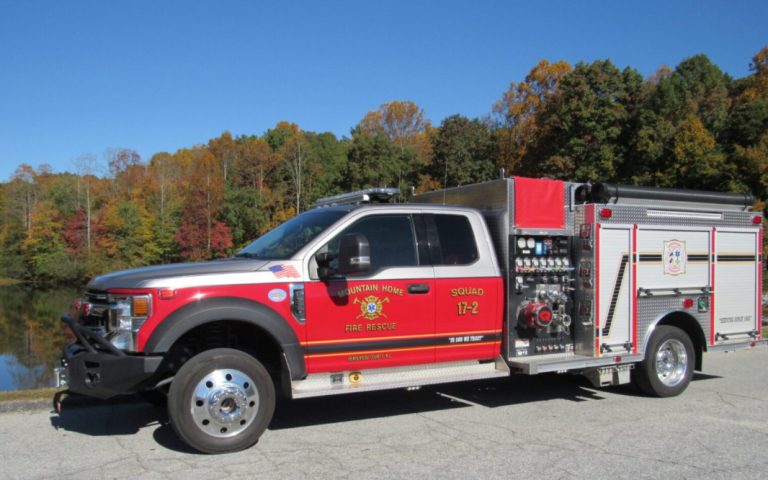
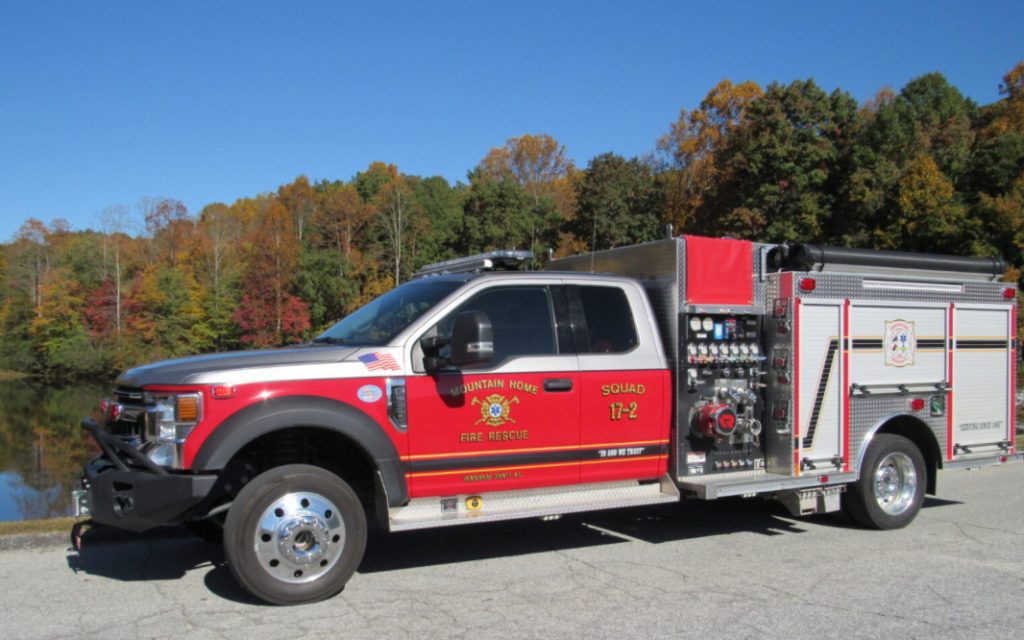
Mountain home has a surprisingly large budget and the ability to purchase nice things. Unfortunately they choose not to and buy really poorly made rosenbauer engines that have so many bells and whistles that are broken half the time you’re in a reserve. Having quality nozzles and hose that is consistent across each apparatus is too expensive, but buying 7 different uniform jackets to issue to all members must be done immediately. Quality hand tools like pro bars for first out trucks is not going to fit in this years budget, but the fleet of SUVs that sit around a majority of the time must be updated.
The 48/96 schedule is actually a fairly nice consistent schedule. The time off provided through sick and vacation is nice. Staffing consists of 5 personnel at 1, and 2 personnel at 2. The falter occurs in how each crew is divided. 3 men on the engine, 2 on the “hook” crew, and 2 in a mini pumper. Higher ups become upset when fire attack isn’t happening fast enough because only 2 of the 7 people are stepping off in gear, one is attempting to operate multiple apparatus, and 3 are figuring out who is in charge and will talk the fire out on his radio. The last one is usually already out of breath somewhere.
As a former employee, I’m not saying this department is without potential. It has good resources, equipment, and the potential to be a great place to work. My biggest concerns after working here are the leadership culture, inconsistent standards, lack of accountability, and the unwillingness to address problems that have been allowed to continue.
I’ll start by saying that this department has a tendency to joke about criticism instead of learning from it. Concerns raised on this page have previously been laughed at by command members and officers, including some of the same people being criticized. When legitimate concerns are met with jokes instead of solutions, the underlying problems are unlikely to change.
There are also concerns about the professionalism of some individuals in leadership and oversight positions. For example, the President has had public interactions where their behavior has come across as unnecessarily confrontational over relatively minor issues. While something like that may seem insignificant on its own, leadership and board members represent the department both inside and outside of the station. How people conduct themselves in public can affect how the department is perceived within the community. There also appears to be a noticeable lack of support for this individual among most staff and board members, which raises questions about whether the current leadership structure is functioning as effectively as it should.
Training is another major concern. It has been acknowledged that some captains do not adequately train their firefighters, yet the issue has sometimes been treated as something to joke about rather than something requiring correction.
It is not uncommon to come in behind an officer who has allowed poor habits to become normal and spend the beginning of a shift correcting problems left by the previous crew.
For someone joining this department expecting officers to train, mentor, and develop them, the quality of that experience can depend heavily on who they work under. Training and development should be consistent regardless of which officer is assigned to a shift.
There are also serious concerns about how some officers perform during major emergencies and other high-stress situations. During hurricanes and other significant inclement-weather events, there have been instances where officers have failed to perform as expected, become overwhelmed, or lost their composure under stressful circumstances. What is particularly concerning is that situations like these can appear to be accepted and simply worked around rather than being addressed through meaningful corrective action, additional training, or accountability.
Firefighters are expected to perform under pressure, and officers have an even greater responsibility because their decisions directly affect the crews they supervise. No one is expected to be perfect, especially during difficult incidents, but repeated performance problems under stress should not simply become something the department learns to work around. If an officer cannot consistently perform their responsibilities during challenging situations, leadership should address the issue rather than allowing it to become the new normal.
Standards also vary significantly between officers. At Stations 1 and 2, basic duties and expectations can change depending on who is working. They shouldn’t. Employees should not have to figure out which rules apply based on which officer is wearing the “officer’s hat” that day. Inconsistent expectations create confusion, resentment, and make accountability difficult.
The same problem exists with how concerns are handled. There is a strong feeling among employees that concerns need a paper trail or extensive documentation before they receive attention. If an entire shift is repeatedly raising the same issue, leadership should address the underlying problem rather than simply moving people around and creating more disruption.
Equipment and vehicle accountability are additional concerns. Trucks and gear are not always treated with the respect they deserve, and careless use does not always appear to have consequences. Finding a truck dirty or poorly maintained when coming on shift can feel routine. These are expensive emergency vehicles, and drivers who have previously damaged or wrecked department vehicles continuing to operate them raises legitimate questions about driver training and accountability.
I have personally seen engineers go an entire shift without performing a pump check or checking fluid levels. That should not be considered acceptable in a fire department.
Basic PPE can also be unnecessarily difficult to obtain. Boots and turnout gear are essential safety equipment, yet there have been instances where volunteers received equipment before full-time firefighters who needed it. Properly equipping firefighters should not be a difficult or unnecessarily delayed process. This raises legitimate questions about how these responsibilities are being managed.
Even department-issued shirts have been an ongoing frustration. It took an excessive amount of time for employees to receive them, and once they were finally issued, some reportedly did not hold up well and quickly became damaged or worn. Something as simple as providing employees with decent-quality, professional shirts should not be this difficult.
It is also frustrating that the department seems unable to come together and establish a consistent, durable, and professional shirt option that employees can be proud to wear. When something as basic as department shirts becomes a recurring issue, it reflects larger problems with organization, communication, and follow-through.
Promotions and leadership standards are another significant concern. Rank should reflect competence, performance, character, and the ability to lead. It should not appear to be influenced by favoritism, personal relationships, or simply the need to fill a vacant position because of staffing problems.
The Lieutenant promotion process is a good example. There is no meaningful practical scenario or hands-on evaluation demonstrating that a candidate can actually perform as an officer. The process consisted of a written statement of interest and an interview. Anyone trusted with the lives and safety of firefighters during an emergency should have to demonstrate leadership, communication, decision-making, and the ability to perform under pressure.
There have also been concerns about candidates relying on AI to prepare their letters of interest, which is particularly notable when the written statement is essentially the only substantive written component of the process.
There are also questions about the standards applied to officers after they are promoted. Some officers struggle to complete basic call reports without significant spelling errors. Some reports are not completed until days after the actual incident, without apparent corrective action. In some cases, firefighters submit their reports more promptly than officers. Reports are also completed differently depending on who is working, and the amount of information entered into the reporting system can be minimal.
Leadership positions should come with higher standards, not lower ones.
Time management and accountability are also concerns. There have been many instances where an officer has remained past shift change packing personal belongings or taking a shower, holding up the incoming shift from fully taking over and beginning its responsibilities. Incoming crews should not have to wait for an officer to finish personal tasks before they can begin their shift.
The Assistant Chief position can also feel disconnected from the day-to-day problems firefighters face. From an employee’s perspective, there has not always been a strong sense of visible involvement or active leadership from that position. Simply showing up and going through the motions does not create confidence that problems are being actively addressed.
Command staff should be engaged in identifying and solving problems, supporting employees, and improving operations—not simply holding a title or repeating information that has already been discussed by the Chief in a Board meeting or employee meeting.
There are also basic professionalism issues that should not be overlooked. Uniform standards should apply consistently. It is difficult to take uniform policies seriously when employees are routinely allowed to wear shirts untucked, wear tongue rings or other visible jewelry that may conflict with established standards, or remain improperly dressed when they should be in uniform and ready for duty. Unfortunately, many of these issues appear to involve officers themselves. Standards mean very little if they are selectively enforced. It is also not uncommon for duty crews to remain out of uniform until approximately 8:30–9:30 in the morning.
Turnover is another issue worth paying attention to. When multiple firefighters leave, entire shifts repeatedly raise the same concerns, and problems continue from one roster to the next, it is reasonable to examine whether the issue goes beyond staffing. Persistent turnover and recurring complaints deserve serious consideration of the leadership culture.
The Chief should be focused on retaining good employees, developing firefighters, addressing unsafe practices, holding officers accountable, and establishing meaningful standards for promotion. Telling unhappy employees to leave in an email does nothing to address the underlying problems. I say this because an email was actually sent stating that if employees were not happy, they could leave.
As a former employee, I would encourage anyone considering working here to understand that their experience may depend heavily on who they work for and how comfortable they are speaking up. The department has the resources and personnel to be a very good organization. What it needs is leadership willing to consistently enforce standards, listen to employees, address problems, and take accountability seriously.
The Chief needs to hold officers to a higher standard and follow through more consistently with duties assigned to them. Leadership responsibilities should come with accountability, and accountability needs to be applied consistently throughout the department.
This department doesn’t need more ways to work around its problems. It needs leadership willing to actually fix them.



Rating Breakdown
1.3/5
1.3/5
3.7/5
2.3/5
3 Reviews on “Mountain Home Fire and Rescue”
This department has massive potential to be a jam up place. There is a room to grow with a diverse district. The problem starts with administration leaving some issues alone but nitpicking others. There is a lack of support whenever it comes to corrective actions made by officers. But that might be slightly nepotistic. There has been occasions where the administration claimed their support of new ideas but then once they are discussed on shift they will shut it down effectively cutting the legs out from under the officers. If a counsel negatively affects the son of the deputy chief the decisions and actions made get reversed. The work environment is great if you don’t have any sort of work ethic or drive to better yourself. If you try to hold yourself and others to a higher standard you are not supported. Problem children are coddled and everyone else is either left alone or the lack of action to the problems are reflected on them. There are people in officer positions that are afraid to do their job and have no owner ship in their decisions. As an officer you are expected to be Barney the dinosaur when dealing with shift issues versus a leader. The culture is based on how much bitch work you do relates to your treatment and how much support you get from admin. The slugs get coddled and the rest of the members are expected to keep their personal standards lower to accommodate them. The more positive aspect of the department is that care is taken to ensure all the equipment and apparatus are in proper working order. Trucks are replaced at reasonable time and stay in good condition. With the 48/96 schedule it is nice to work and admin is accommodating to letting members sleep if they had busy nights. The only staffing issues could be fixed with an extra firefighter and more trained drivers. But that would require people to either do their basic job or go above that. But in certain cases the bare minimum is the only standard, and it is acceptable to go lower than that if you are one of the golden children.
Mountain home fire and rescue has the potential of being an effective and well run department. Unfortunately it comes short with many fixable issues.
Leadership is lacking when it comes to true fire ground operations. Most often everyone likes to arrive on scene and attempt to be in charge all while 1 or 2 of the 7 on duty personnel are ready to work and actually wearing gear. Officers are more often concerned with completing Chiefs honey-do list rather than training and molding its up and coming firefighters, engineers and Lieutenants into competent personnel. They then become upset and yell when new firefighters fresh out of academy arrive on scene and are not confident or proficient. Now the officer will have to do something beyond talking to dispatch which they don’t like because everyone’s going to see they don’t know what to do either.
Morale is low unless you have bugles on Chiefs favorite shift. All subordinates that want to train, exercise, and learn new skills are on there own and usually belittled for doing things like running, not weighing 300 lbs, and actually wanting to improve skill sets instead of telling the uppers how great they are and watch tv for 9 hours a day.
Mountain home has a surprisingly large budget and the ability to purchase nice things. Unfortunately they choose not to and buy really poorly made rosenbauer engines that have so many bells and whistles that are broken half the time you’re in a reserve. Having quality nozzles and hose that is consistent across each apparatus is too expensive, but buying 7 different uniform jackets to issue to all members must be done immediately. Quality hand tools like pro bars for first out trucks is not going to fit in this years budget, but the fleet of SUVs that sit around a majority of the time must be updated.
The 48/96 schedule is actually a fairly nice consistent schedule. The time off provided through sick and vacation is nice. Staffing consists of 5 personnel at 1, and 2 personnel at 2. The falter occurs in how each crew is divided. 3 men on the engine, 2 on the “hook” crew, and 2 in a mini pumper. Higher ups become upset when fire attack isn’t happening fast enough because only 2 of the 7 people are stepping off in gear, one is attempting to operate multiple apparatus, and 3 are figuring out who is in charge and will talk the fire out on his radio. The last one is usually already out of breath somewhere.
As a former employee, I’m not saying this department is without potential. It has good resources, equipment, and the potential to be a great place to work. My biggest concerns after working here are the leadership culture, inconsistent standards, lack of accountability, and the unwillingness to address problems that have been allowed to continue.
I’ll start by saying that this department has a tendency to joke about criticism instead of learning from it. Concerns raised on this page have previously been laughed at by command members and officers, including some of the same people being criticized. When legitimate concerns are met with jokes instead of solutions, the underlying problems are unlikely to change.
There are also concerns about the professionalism of some individuals in leadership and oversight positions. For example, the President has had public interactions where their behavior has come across as unnecessarily confrontational over relatively minor issues. While something like that may seem insignificant on its own, leadership and board members represent the department both inside and outside of the station. How people conduct themselves in public can affect how the department is perceived within the community. There also appears to be a noticeable lack of support for this individual among most staff and board members, which raises questions about whether the current leadership structure is functioning as effectively as it should.
Training is another major concern. It has been acknowledged that some captains do not adequately train their firefighters, yet the issue has sometimes been treated as something to joke about rather than something requiring correction.
It is not uncommon to come in behind an officer who has allowed poor habits to become normal and spend the beginning of a shift correcting problems left by the previous crew.
For someone joining this department expecting officers to train, mentor, and develop them, the quality of that experience can depend heavily on who they work under. Training and development should be consistent regardless of which officer is assigned to a shift.
There are also serious concerns about how some officers perform during major emergencies and other high-stress situations. During hurricanes and other significant inclement-weather events, there have been instances where officers have failed to perform as expected, become overwhelmed, or lost their composure under stressful circumstances. What is particularly concerning is that situations like these can appear to be accepted and simply worked around rather than being addressed through meaningful corrective action, additional training, or accountability.
Firefighters are expected to perform under pressure, and officers have an even greater responsibility because their decisions directly affect the crews they supervise. No one is expected to be perfect, especially during difficult incidents, but repeated performance problems under stress should not simply become something the department learns to work around. If an officer cannot consistently perform their responsibilities during challenging situations, leadership should address the issue rather than allowing it to become the new normal.
Standards also vary significantly between officers. At Stations 1 and 2, basic duties and expectations can change depending on who is working. They shouldn’t. Employees should not have to figure out which rules apply based on which officer is wearing the “officer’s hat” that day. Inconsistent expectations create confusion, resentment, and make accountability difficult.
The same problem exists with how concerns are handled. There is a strong feeling among employees that concerns need a paper trail or extensive documentation before they receive attention. If an entire shift is repeatedly raising the same issue, leadership should address the underlying problem rather than simply moving people around and creating more disruption.
Equipment and vehicle accountability are additional concerns. Trucks and gear are not always treated with the respect they deserve, and careless use does not always appear to have consequences. Finding a truck dirty or poorly maintained when coming on shift can feel routine. These are expensive emergency vehicles, and drivers who have previously damaged or wrecked department vehicles continuing to operate them raises legitimate questions about driver training and accountability.
I have personally seen engineers go an entire shift without performing a pump check or checking fluid levels. That should not be considered acceptable in a fire department.
Basic PPE can also be unnecessarily difficult to obtain. Boots and turnout gear are essential safety equipment, yet there have been instances where volunteers received equipment before full-time firefighters who needed it. Properly equipping firefighters should not be a difficult or unnecessarily delayed process. This raises legitimate questions about how these responsibilities are being managed.
Even department-issued shirts have been an ongoing frustration. It took an excessive amount of time for employees to receive them, and once they were finally issued, some reportedly did not hold up well and quickly became damaged or worn. Something as simple as providing employees with decent-quality, professional shirts should not be this difficult.
It is also frustrating that the department seems unable to come together and establish a consistent, durable, and professional shirt option that employees can be proud to wear. When something as basic as department shirts becomes a recurring issue, it reflects larger problems with organization, communication, and follow-through.
Promotions and leadership standards are another significant concern. Rank should reflect competence, performance, character, and the ability to lead. It should not appear to be influenced by favoritism, personal relationships, or simply the need to fill a vacant position because of staffing problems.
The Lieutenant promotion process is a good example. There is no meaningful practical scenario or hands-on evaluation demonstrating that a candidate can actually perform as an officer. The process consisted of a written statement of interest and an interview. Anyone trusted with the lives and safety of firefighters during an emergency should have to demonstrate leadership, communication, decision-making, and the ability to perform under pressure.
There have also been concerns about candidates relying on AI to prepare their letters of interest, which is particularly notable when the written statement is essentially the only substantive written component of the process.
There are also questions about the standards applied to officers after they are promoted. Some officers struggle to complete basic call reports without significant spelling errors. Some reports are not completed until days after the actual incident, without apparent corrective action. In some cases, firefighters submit their reports more promptly than officers. Reports are also completed differently depending on who is working, and the amount of information entered into the reporting system can be minimal.
Leadership positions should come with higher standards, not lower ones.
Time management and accountability are also concerns. There have been many instances where an officer has remained past shift change packing personal belongings or taking a shower, holding up the incoming shift from fully taking over and beginning its responsibilities. Incoming crews should not have to wait for an officer to finish personal tasks before they can begin their shift.
The Assistant Chief position can also feel disconnected from the day-to-day problems firefighters face. From an employee’s perspective, there has not always been a strong sense of visible involvement or active leadership from that position. Simply showing up and going through the motions does not create confidence that problems are being actively addressed.
Command staff should be engaged in identifying and solving problems, supporting employees, and improving operations—not simply holding a title or repeating information that has already been discussed by the Chief in a Board meeting or employee meeting.
There are also basic professionalism issues that should not be overlooked. Uniform standards should apply consistently. It is difficult to take uniform policies seriously when employees are routinely allowed to wear shirts untucked, wear tongue rings or other visible jewelry that may conflict with established standards, or remain improperly dressed when they should be in uniform and ready for duty. Unfortunately, many of these issues appear to involve officers themselves. Standards mean very little if they are selectively enforced. It is also not uncommon for duty crews to remain out of uniform until approximately 8:30–9:30 in the morning.
Turnover is another issue worth paying attention to. When multiple firefighters leave, entire shifts repeatedly raise the same concerns, and problems continue from one roster to the next, it is reasonable to examine whether the issue goes beyond staffing. Persistent turnover and recurring complaints deserve serious consideration of the leadership culture.
The Chief should be focused on retaining good employees, developing firefighters, addressing unsafe practices, holding officers accountable, and establishing meaningful standards for promotion. Telling unhappy employees to leave in an email does nothing to address the underlying problems. I say this because an email was actually sent stating that if employees were not happy, they could leave.
As a former employee, I would encourage anyone considering working here to understand that their experience may depend heavily on who they work for and how comfortable they are speaking up. The department has the resources and personnel to be a very good organization. What it needs is leadership willing to consistently enforce standards, listen to employees, address problems, and take accountability seriously.
The Chief needs to hold officers to a higher standard and follow through more consistently with duties assigned to them. Leadership responsibilities should come with accountability, and accountability needs to be applied consistently throughout the department.
This department doesn’t need more ways to work around its problems. It needs leadership willing to actually fix them.
Do better.